
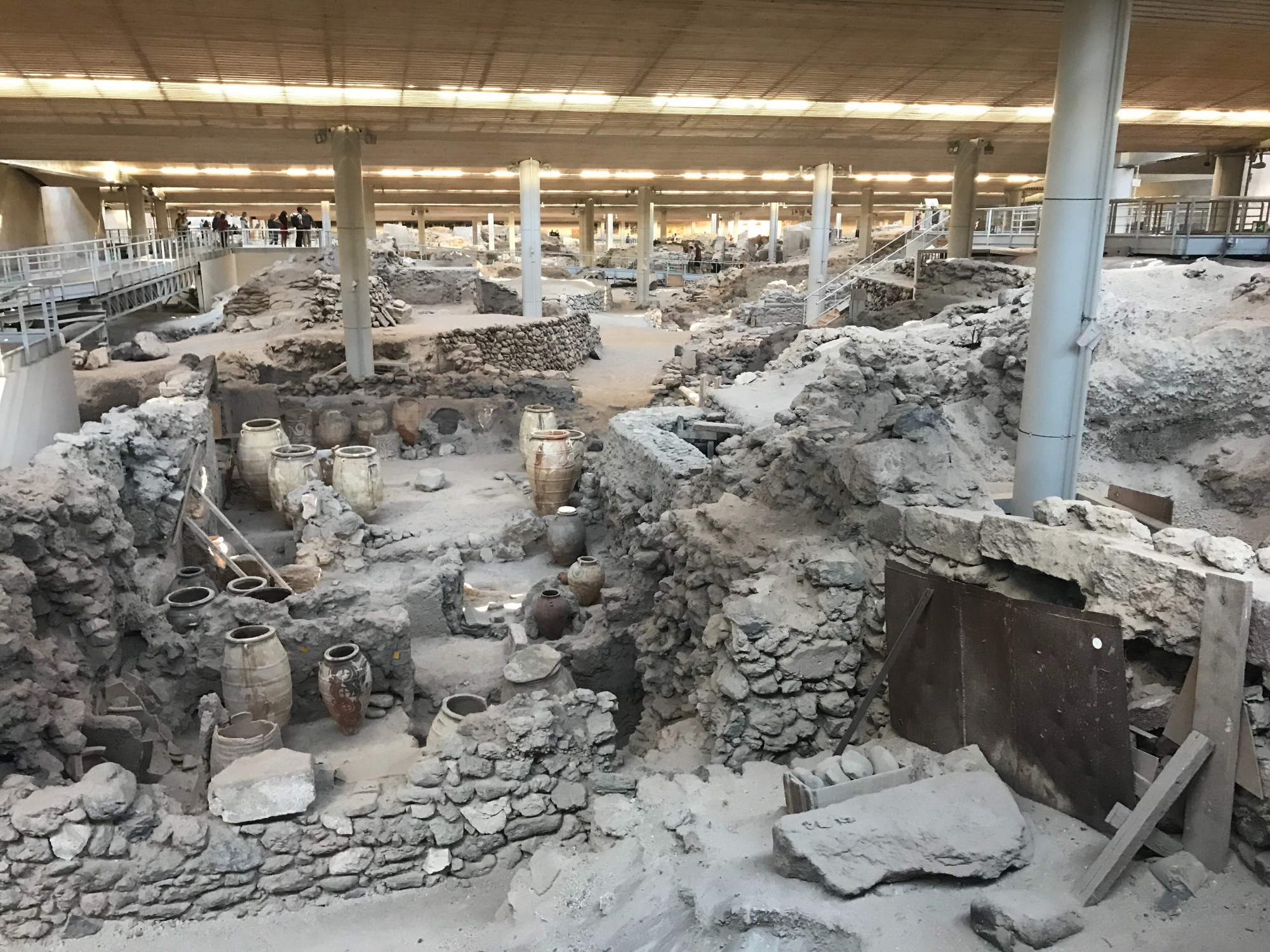
Akrotiri, located on the southwestern tip of Santorini, is one of the island's most significant and captivating destinations, globally renowned for its invaluable archaeological heritage. The area is home to one of the most important prehistoric settlements of the Aegean, which flourished during the Bronze Age until it was buried under tons of volcanic ash during the cataclysmic eruption of the 16th century BC. This thick layer of ash acted as a protective blanket, preserving the ancient city virtually intact through time and earning it the title of the "Minoan Pompeii."
A tour of the modern, bioclimatic sheltered archaeological site reveals a remarkably advanced city complete with multi-story buildings, complex drainage systems, wide squares, and artisan workshops. The discoveries bear witness to a highly sophisticated urban society with extensive trade and maritime connections throughout the Mediterranean. Although the magnificent, vividly colored original frescoes are now housed in museums, walking through the preserved streets offers a unique glimpse into daily life as it was thousands of years ago.
Beyond its historical magnitude, Akrotiri is famous for its rugged natural landscape and dramatic coastal contrasts. Just a short distance from the ruins lies the famous Red Beach, framed by soaring, crimson volcanic cliffs and dark sand, as well as the historic Akrotiri Lighthouse on the westernmost cliff edge, which offers one of the most atmospheric and serene sunset views on the island. Akrotiri remains a premier destination where the island's deep past seamlessly connects with its unique geological identity.