
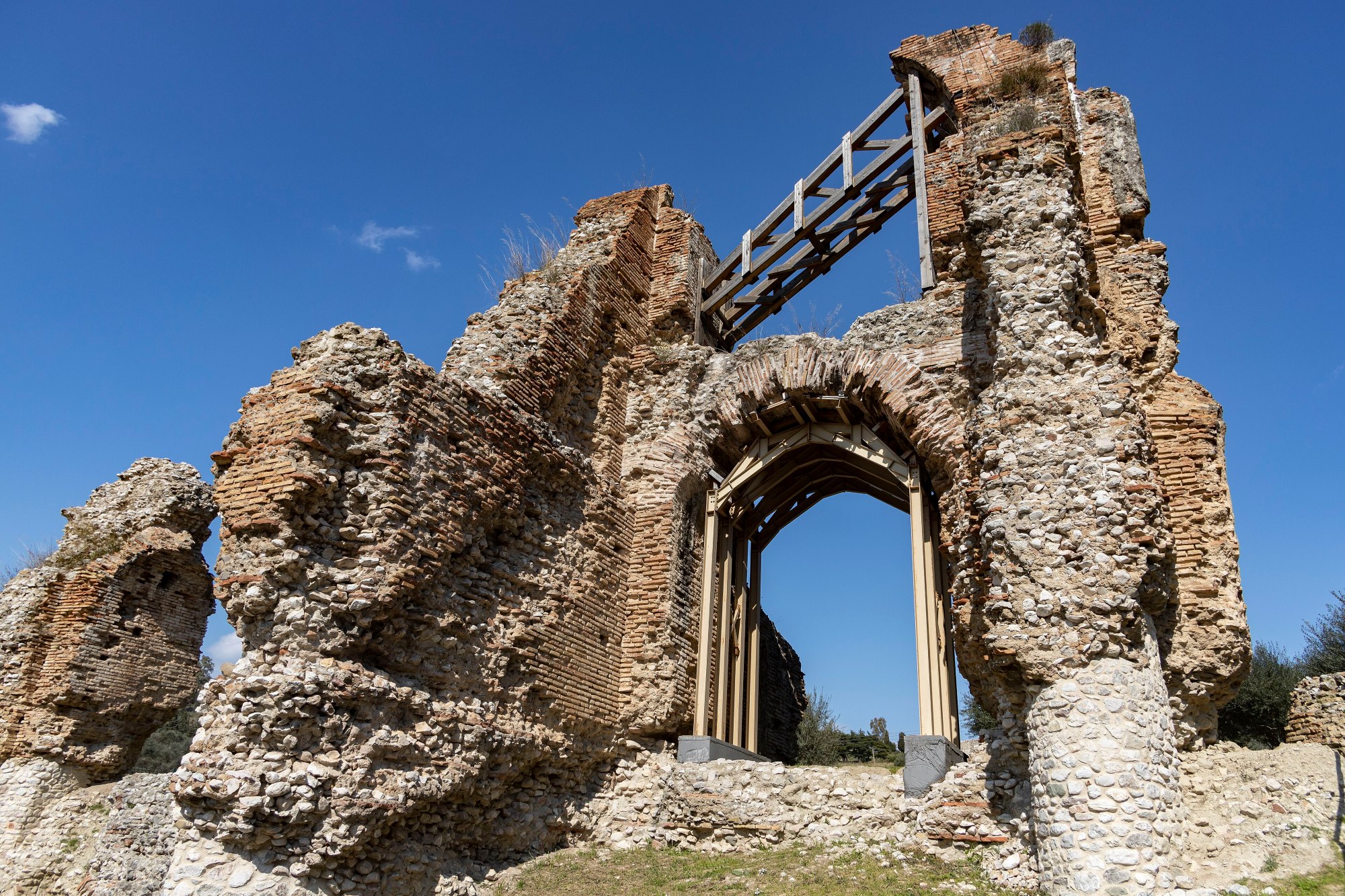
The Roman Aqueduct of Moria in Lesbos stands as one of the most remarkable monuments of ancient engineering in the Greek world. Constructed around the 2nd century AD, its purpose was to transport fresh water from the springs of Mount Olympus to the ancient city of Mytilene, covering a total distance of approximately 26 kilometers. The entire network was designed with meticulous precision to ensure a continuous water flow relying solely on the force of gravity.
The most spectacular surviving section of this monumental project is the grand arcade located near the village of Moria, stretching 170 meters in length and reaching a height of 26 meters. It features successive tiers of arches crafted from local grey marble, supported by heavy stone pillars. The architectural design masterfully combines absolute structural functionality with a rare aesthetic elegance, allowing the soaring stone arches to blend harmoniously with the surrounding olive groves.
Today, the aqueduct is celebrated as a major cultural heritage site that highlights the advanced technical expertise of Roman engineers in urban water management. Despite centuries of seismic activity and natural wear, the ruins remain imposing, drawing numerous visitors and researchers alike. Ongoing conservation and site-protection efforts ensure that this magnificent example of ancient technology and infrastructure is preserved for future generations to admire.