
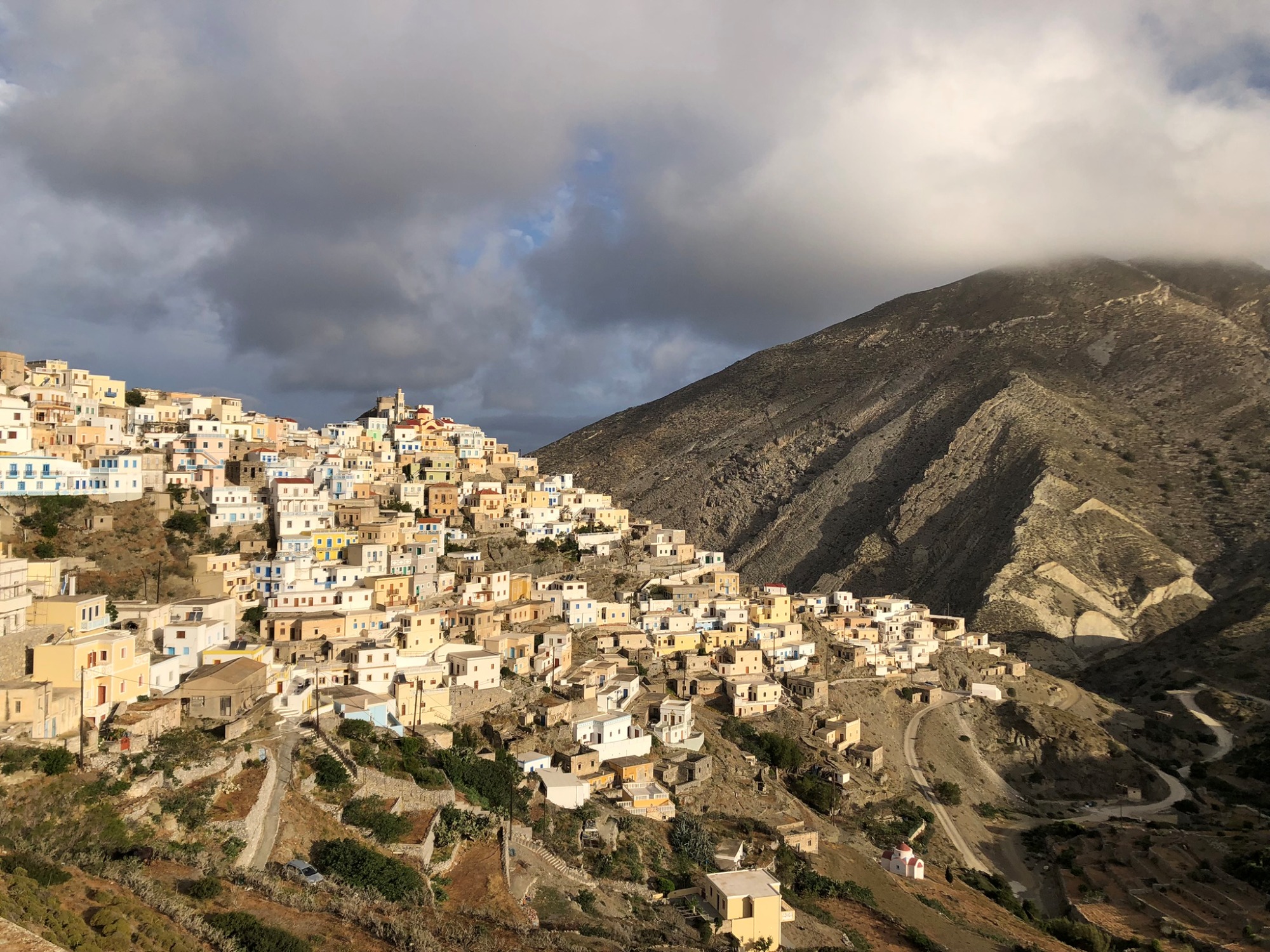
Karpathos, the second-largest island of the Dodecanese, is a place of captivating contrast and raw beauty where time-honored customs remain virtually untouched. Geographically positioned between Rhodes and Crete, the island is defined by a dramatic mountain ridge that plunges steeply into the deep blue Aegean Sea. The island's greatest treasure is its cultural authenticity, preserving local traditions within daily life more intensely than almost any other place in Greece.
The crown jewel of Karpathos is Olymbos (or Olympos), an extraordinary medieval village perched like an amphitheater on a remote, windswept mountain ridge in the north. Due to centuries of geographic isolation, Olymbos operates as a living cultural museum: women still proudly wear their intricate traditional dress (kavadia) in their daily routines, locals speak a distinct dialect retaining ancient Greek roots, and community life is still governed by traditional feasts (glendia) driven by the Cretan-style lyre, bagpipes (tsampouna), and improvised poetic verses (mantinades).
The island's capital and main port is Pigadia, a vibrant coastal town, while picturesque mountain settlements like Menetes, Aperi, and the quiet fishing village of Finiki offer diverse glimpses of authentic hospitality. The coastline of Karpathos boasts some of the most pristine and visually stunning beaches in the Mediterranean. Apella, where pine trees cascade down to meet deep emerald waters, has been repeatedly voted among Europe's top beaches. Other breathtaking shores include Kyra Panagia, Achata, and the exotic, shallow sands of Diakoftis. Furthermore, the island's southern tip (Afiartis) is globally renowned as a premier destination for windsurfing, drawing international athletes due to its exceptionally strong and consistent wind conditions.