
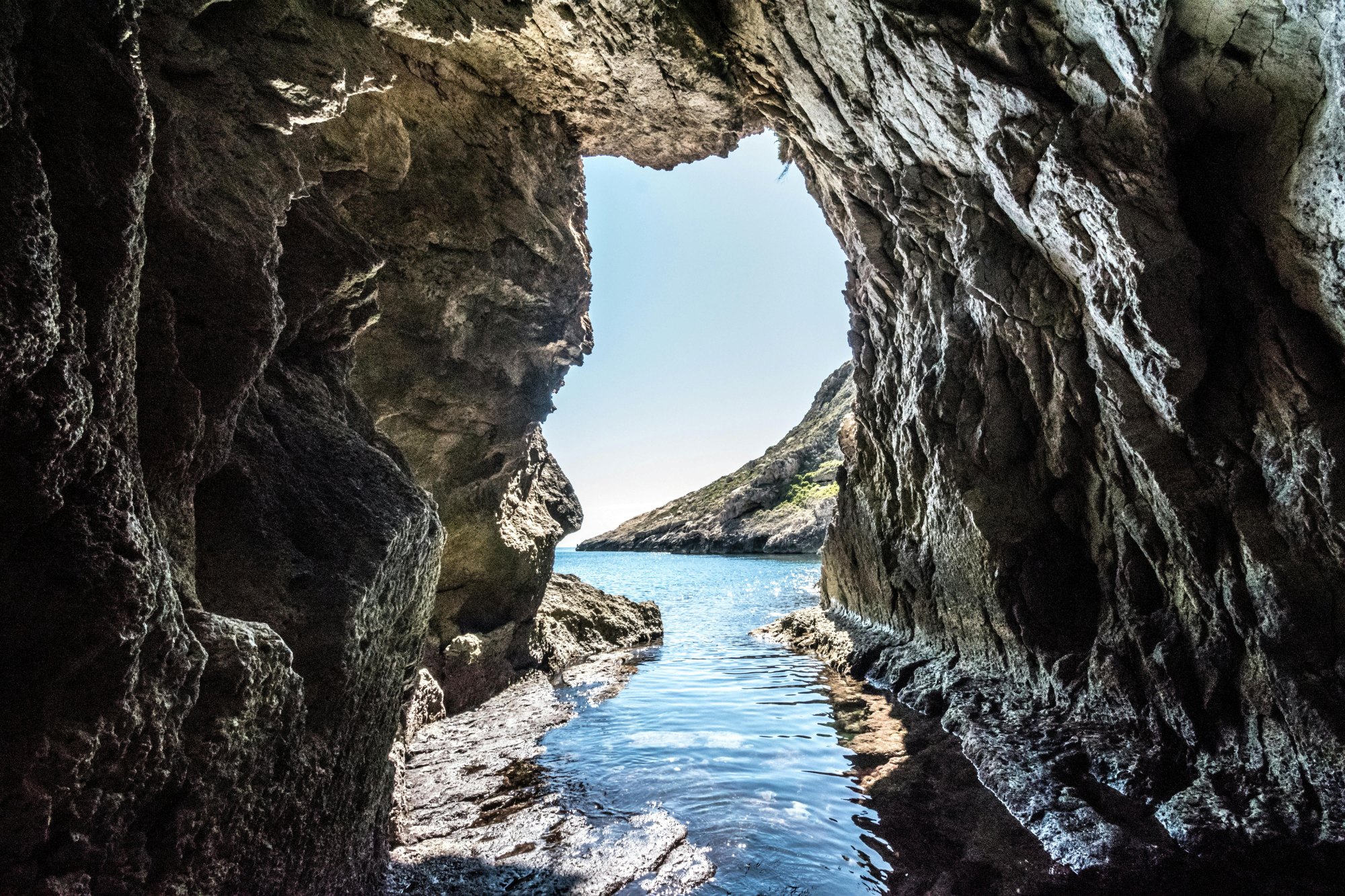
Chrysospilia is one of the most impressive natural landmarks of Folegandros, a small Cycladic island in the Aegean Sea. It is a sea cave located on the northeastern coast of the island, accessible only by boat, which adds to its sense of mystery and exclusivity.
The cave is famous for its remarkable geological formations and its rare archaeological significance. Inside Chrysospilia, visitors can see stalactites and stalagmites formed over thousands of years, creating an impressive natural interior shaped by the slow action of water and time.
What makes Chrysospilia especially unique is its historical importance. In antiquity, the cave was used as a place of worship. Archaeological findings suggest that it was dedicated to Apollo or other ancient deities associated with light and the sea. Among the most notable discoveries are ancient inscriptions carved into the rock walls, as well as traces of ritual offerings, indicating that the cave held religious significance for ancient sailors and island inhabitants.
The entrance of the cave opens directly to the sea, allowing sunlight to reflect dramatically on the water and illuminate the interior in shades of blue and gold. This natural lighting effect contributes to the cave's legendary name, as "Chrysospilia" means "Golden Cave" in Greek.
Today, Chrysospilia remains a protected and relatively untouched site, visited mainly by small boats during calm weather. Its remote location and fragile environment help preserve its natural beauty and archaeological value.
A visit to Chrysospilia offers a unique combination of natural wonder and ancient history, making it one of the hidden treasures of Folegandros.